

EN 13508-2 Sewer Inspection
The European coding standard for CCTV inspection of drains and sewers.
EN 13508-2 is the backbone of sewer condition reporting across the European Union. Adopted as the national standard in Germany (DIN EN 13508-2), the United Kingdom (BS EN 13508-2), the Netherlands, and most EU member states, it gives CCTV operators a single, unambiguous vocabulary for describing what they see inside a pipe — from hairline cracks to full collapses, from fine root intrusion to gushing infiltration. The coding system feeds directly into rehabilitation planning software, making it the critical link between fieldwork and investment decisions.

What is EN 13508-2?
EN 13508-2 is the European standard for coding visual observations during CCTV inspection of drains and sewers. It defines a structured syntax of main codes, characterisations, and quantifications to describe structural defects, operational conditions, and network features — without assigning condition grades.
- Full Name
- Investigation and assessment of drain and sewer systems outside buildings — Part 2: Visual inspection coding system
- Issuing Body
- European Committee for Standardization (CEN)
- Current Revision
- EN 13508-2:2003+A1:2011
OVERVIEW
How EN 13508-2 Works
EN 13508-2 is strictly a descriptive standard, not an assessment standard. It provides the vocabulary to describe what is observed inside a drain or sewer — a crack’s orientation, width, and position — but it does not assign a severity grade or condition score. This separation of description from assessment is deliberate: it allows different countries to apply their own grading methodologies to the same underlying data. Germany uses DWA-M 149-2 to convert EN 13508-2 observations into rehabilitation priorities, the Netherlands uses the RIONED classification, and the United Kingdom uses the Sewer Rehabilitation Manual (SRM). All three produce different condition indices from identical field data, because each country has different rehabilitation thresholds and investment priorities.
Every observation follows the same four-part syntax: a Main Code identifying what was seen, one or two Characterisations refining the observation, a Quantification measuring its extent or severity, and a Location expressed as chainage (distance from the start node in metres) plus a clock reference (1–12) for circumferential position. This layered approach ensures that two operators inspecting the same pipe produce functionally identical records, even if they work for different contractors in different countries. The consistent syntax also makes the data machine-readable — grading software parses the codes automatically without manual interpretation.
The standard applies to gravity drains, sewers, manholes, and inspection chambers. It covers CCTV (closed-circuit television) inspections as well as man-entry visual surveys of larger-diameter pipes. A typical inspection begins at a manhole (the start node), with the camera travelling toward the next manhole (the finish node), logging each defect or feature encountered along the way. The operator adds observations sequentially in ascending chainage order — ensuring the inspection record reads as a chronological, spatially ordered log of the pipe’s internal condition.
OBSERVATION CODES
EN 13508-2 Main Code Catalog
The main code is the first and most critical element of every observation. EN 13508-2 organises its codes into four groups: structural defects (prefix BA), operational conditions (prefix BB), inventory features (prefix BC), and inspection handling events (prefix BD). Each three-letter code uniquely identifies the type of observation.
Group BA: Structural Defects
Group BA covers structural and fabric defects — physical damage to the pipe wall itself. These codes range from deformation (BAA), where the pipe cross-section has been distorted by external load or ground movement, through cracks and fissures (BAB), to complete collapse (BAC) where the pipe structure has failed entirely. Defective masonry (BAD) and mortar (BAE) apply specifically to brick-built sewers common in older European cities. Surface damage (BAF) captures wear and corrosion of the pipe wall, while intrusion (BAG) records a protruding service pipe that has broken into the sewer. The most alarming structural codes are BAL and BAM — visible soil or void behind the pipe wall, indicating loss of bedding support and potential ground subsidence.
Group BB: Operational Conditions
Group BB covers operational and service conditions that affect flow capacity without necessarily indicating structural failure. Root intrusion (BBA) is the most frequently logged code in temperate climates — roots exploit joint gaps and cracks, progressively reducing the pipe’s cross-section. The standard’s characterisation codes distinguish between tap roots (single entry point), fine roots (widespread hair-like growth), and mass roots (dense clumps blocking the bore). Attached deposits (BBB) include encrustation, grease build-up, and mineral scaling adhering to the pipe wall, while settled deposits (BBC) describe silt, rubble, and debris resting on the invert. Infiltration (BBD) records groundwater entering the system through defective joints or cracks, classified from slow seeping to active gushing — a critical indicator for inflow and infiltration (I&I) studies that determine sewer capacity and treatment plant loading.
Groups BC & BD: Inventory and Handling
Groups BC and BD record non-defect observations that are equally important for network modelling and asset management. BC codes log physical features of the network: lateral connections (BCA) are classified as factory-made junctions, saddle connections, or break-in intrusions, with the connecting pipe’s diameter recorded as a quantification. Bends (BCD), junctions (BCE), and changes in pipe size or material (BCF) are all logged to maintain an accurate as-built digital record of the sewer network. BD codes handle inspection logistics — the mandatory start marker (BDA), the end marker (BDB), any abandonment due to blockage or equipment failure (BDC), water level changes during the survey (BDD), and free-text general remarks (BDE).
| Code | Group | Observation |
|---|---|---|
| BAA | Structural | Deformation |
| BAB | Structural | Fissure / Crack |
| BAC | Structural | Break / Collapse |
| BAD | Structural | Defective Masonry |
| BAE | Structural | Defective Mortar |
| BAF | Structural | Surface Damage (Wear / Corrosion) |
| BAG | Structural | Intrusion (Protruding Pipe) |
| BAH | Structural | Lining Defect |
| BAI | Structural | Repair Defect |
| BAJ | Structural | Weld Failure |
| BAK | Structural | Porous Pipe |
| BAL | Structural | Soil Visible |
| BAM | Structural | Void Visible |
| BBA | Operational | Roots |
| BBB | Operational | Attached Deposits (Encrustation / Grease) |
| BBC | Operational | Settled Deposits (Silt / Rubble) |
| BBD | Operational | Ingress / Infiltration |
| BBE | Operational | Obstacle / Obstruction |
| BBF | Operational | Vermin |
| BCA | Inventory | Connection (Lateral) |
| BCB | Inventory | Lining Start / End |
| BCC | Inventory | Point Repair |
| BCD | Inventory | Bend |
| BCE | Inventory | Junction |
| BCF | Inventory | Change in Size / Material |
| BCG | Inventory | Anchor / Thrust Block |
| BDA | Handling | Start of Inspection |
| BDB | Handling | End of Inspection |
| BDC | Handling | Inspection Abandoned |
| BDD | Handling | Water Level Change |
| BDE | Handling | General Remark |
Codes prefixed BA denote structural defects, BB operational conditions, BC inventory features, and BD inspection handling events.
CODING SYNTAX
The Code–Characterisation–Quantification Syntax
What makes EN 13508-2 unique among inspection standards is its layered coding syntax. Every observation is built from up to four elements that progressively refine the description — from “what” to “what kind” to “how much” to “where.”
The first layer is the Main Code — the three-letter identifier from the catalog. The second layer adds one or two Characterisations, each a single letter that refines the observation. For a crack (BAB), Characterisation 1 describes the orientation: A for longitudinal, B for circumferential, C for complex or multiple, D for spiral. For roots (BBA), the same letter position describes root type: A for tap root, B for fine roots, C for mass or clump. For infiltration (BBD), the letters describe flow intensity: A for seeping, B for dripping, C for running, D for gushing. The meaning of each characterisation letter is context-dependent — it changes based on the main code it accompanies. This is the aspect of the standard that requires the most operator training.
The third layer is Quantification — a numeric measurement that makes the observation objective and comparable. For cracks (BAB), Quantification 1 records the width in millimetres, typically categorised as hairline (less than 1 mm), moderate (1–5 mm), or wide (greater than 5 mm). For deformation (BAA), it records the percentage reduction of the pipe’s cross-section — a critical structural metric. For connections (BCA), Quantification 1 gives the diameter of the lateral pipe in millimetres, while Quantification 2 records how far the connection protrudes into the main pipe bore. For roots (BBA), quantification measures the percentage of cross-section lost to root growth. Not every main code requires quantification; some observations like vermin (BBF) or the inspection start marker (BDA) are purely categorical.
The fourth layer is Location, expressed in two dimensions. Longitudinal position is recorded as chainage — the distance in metres from the start node (e.g., 14.3 m). Circumferential position uses a clock reference from 1 to 12, where 12 is the crown (top) of the pipe and 6 is the invert (bottom). A defect spanning from 10 o’clock to 2 o’clock is recorded with Clock Start = 10 and Clock Finish = 2 — indicating it wraps over the crown. This dual-axis location system pinpoints every observation in three-dimensional space within the pipe, enabling precise mapping of defect progression over repeated inspections.
Try this EN 13508-2 form in Geocadra
We have a pre-built EN 13508-2 inspection template ready to go. Sign up and start your first condition assessment today.
Free 14-day trial. No credit card required.
PIPE ATTRIBUTES
Header Data — What Gets Recorded Before Coding Begins
Before the CCTV camera enters the pipe, the operator records a set of fixed attributes that describe the asset being inspected. This header data establishes the context for all subsequent observations.
Every inspection run is defined by a start node and finish node — typically two manholes at either end of the pipe section. The operator records the inspection direction (upstream, travelling against flow; or downstream, travelling with flow), which determines how chainage distances are measured. The pipe shape is recorded using EN 13508-2’s single-letter codes: A for circular, B for egg-shaped, C for rectangular, D for square, E for oval or elliptical, F for horseshoe, and Z for any other profile. Pipe dimensions are entered in millimetres — for circular pipes only the height (internal diameter) is required, while non-circular shapes require both height and width measurements to define the full cross-sectional geometry.
The pipe material is coded with a single letter: A for concrete, B for brick or masonry, C for clay or stoneware, D for fibre cement, E for PVC, F for PE (polyethylene), and further codes through to Z for other materials not in the standard list. The operator also records whether a lining is present — this changes how certain defect codes should be interpreted, since a crack in a lined pipe may indicate lining failure rather than host pipe damage. Weather conditions at the time of inspection and any pre-cleaning method used (jetting, flushing, or winching) complete the header record. These fields are not just administrative: they directly influence how downstream grading software interprets the observation codes. A 5% deformation in a rigid concrete pipe is structurally far more significant than the same measurement in a flexible PE pipe.
DIGITAL WORKFLOW
Digitize EN 13508-2 Inspections with Geocadra
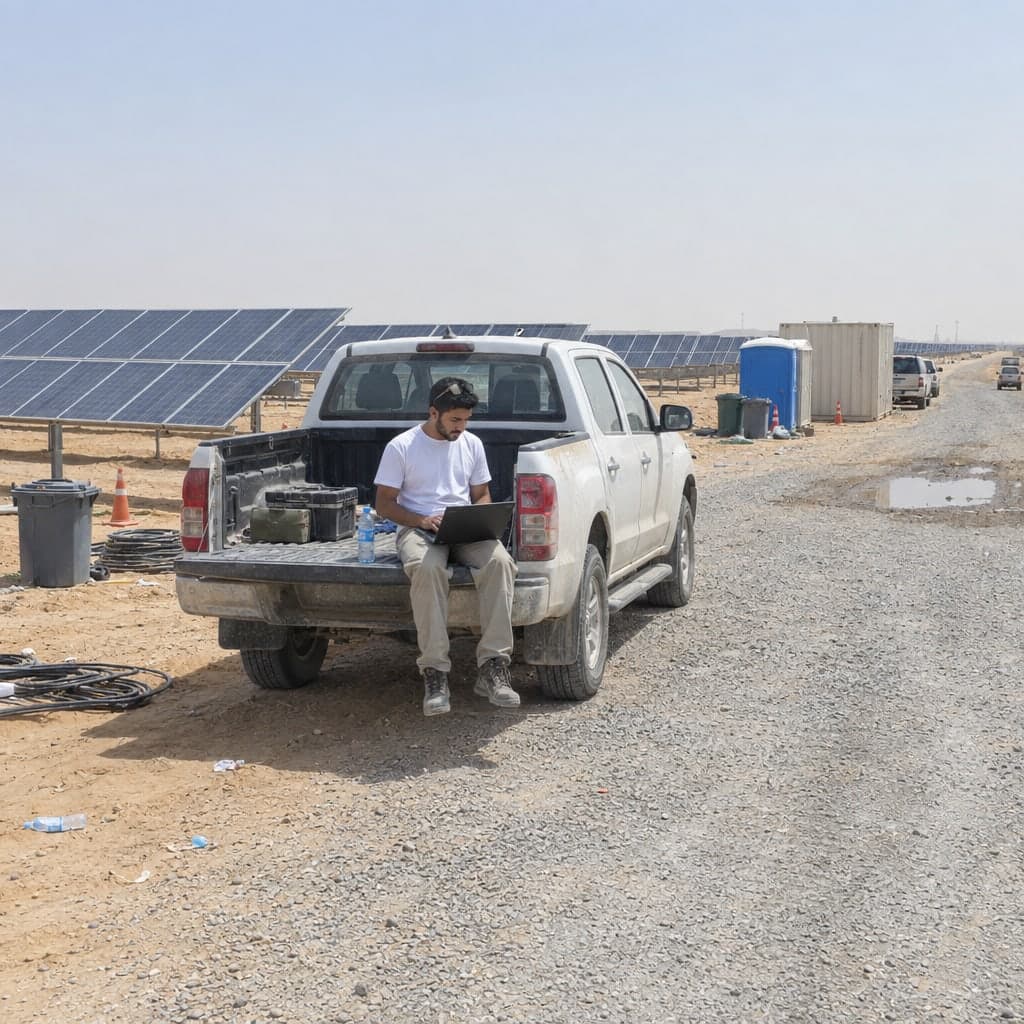
Traditional EN 13508-2 inspections rely on specialist CCTV software that is expensive, locked to specific hardware, and difficult to integrate with GIS systems. Geocadra brings the full coding standard to any mobile device.
Pre-built EN 13508-2 coding forms
Drop-down selectors for all main codes, characterisations, and pipe attributes — mapped directly to the standard. Operators select codes from structured menus instead of memorising three-letter abbreviations.
Clock reference and chainage tracking
Circumferential position (1–12) and longitudinal chainage are recorded per observation. The form enforces ascending chainage order to match the standard’s sequencing requirement.
Photo and video attachment per observation
Link CCTV stills or video clips directly to individual observation records. Reviewers see the visual evidence alongside the coded data without switching between systems.
Export-ready data for grading software
Inspection data exports in structured formats compatible with downstream condition grading tools like DWA-M 149-2 or RIONED. The coded observations transfer directly into rehabilitation planning workflows.
QUESTIONS
Frequently Asked Questions
What is EN 13508-2?
EN 13508-2 is the European standard that defines a coding system for visual inspection of drains and sewers. It provides standardised three-letter main codes, characterisation letters, and quantification rules for describing defects, features, and conditions observed during CCTV surveys — serving as the common language for sewer condition reporting across the EU.
Does EN 13508-2 assign condition grades?
No. EN 13508-2 is strictly a descriptive coding standard — it defines how to record what is observed, not how to rate its severity. Condition grading is performed by separate national methodologies such as DWA-M 149-2 in Germany or the RIONED system in the Netherlands, which interpret the EN 13508-2 codes to produce numeric condition indices.
What is the difference between EN 13508-1 and EN 13508-2?
EN 13508-1 covers the general requirements for investigation and assessment of sewer systems, including planning, data management, and reporting frameworks. EN 13508-2 specifically defines the visual inspection coding system — the three-letter codes, characterisations, and quantifications that operators use during CCTV or man-entry surveys.
What does the clock reference mean in EN 13508-2?
The clock reference describes circumferential position within the pipe cross-section, using an analogue clock face from 1 to 12. Position 12 is the crown (top of pipe), 6 is the invert (bottom), 3 is the right springline, and 9 is the left springline. A defect recorded from clock 10 to clock 2 indicates it wraps over the crown.
Is EN 13508-2 mandatory in Europe?
EN 13508-2 is a CEN standard adopted as a national standard in all EU and EFTA member states — published as DIN EN 13508-2 in Germany, BS EN 13508-2 in the UK, and NEN-EN 13508-2 in the Netherlands. While not always legally mandated, most municipal sewer operators and regulatory frameworks require its use for publicly funded inspection programmes.
How does EN 13508-2 compare to NASSCO PACP?
Both standards code sewer CCTV observations, but they differ in structure. NASSCO PACP (used in North America) assigns a 1-to-5 condition grade directly in the field. EN 13508-2 only describes observations — grading happens downstream via national methodologies. PACP uses its own code set, while EN 13508-2 uses the BA/BB/BC/BD prefix system.
In practice
See how the round runs in Geocadra
The solution page shows this inspection regime on real open data: the import, the form, the round, the record per asset and the export.
Lighting columns, poles, sewers and charge points inspected on a map, with every round appended to the assetOpen the solution page: Utilities & Public LightingTRY IT FREE
Digitize your EN 13508-2 inspections
Replace paper forms and spreadsheets with structured digital inspections, built for standards like EN 13508-2.
No credit card requiredFree trial included