

NEN 2767 Structures
Condition assessment of infrastructure and civil engineering structures using the NEN 2767 methodology.
NEN 2767 Structures extends the proven Dutch condition measurement methodology to infrastructure and civil engineering assets such as bridges, tunnels, locks, quay walls, and retaining structures. While the core scoring algorithm remains identical to the building variant, the decomposition hierarchy, element catalogs, and defect lists are tailored to the materials, exposure conditions, and failure modes unique to infrastructure. The result is a reproducible, objective condition dataset that drives multi-year maintenance programs for asset portfolios worth billions.

What is NEN 2767 Structures?
NEN 2767 for structures is the Dutch methodology for objectively assessing the physical condition of infrastructure and civil engineering assets — including bridges, tunnels, quay walls, and locks — using a standardized 1-to-6 condition score derived from defects classified by severity, intensity, and extent.
- Full Name
- Conditiemeting van constructies in de civiele infrastructuur
- Issuing Body
- Netherlands Standardization Institute (NEN)
- Current Revision
- NEN 2767-1:2019+C1:2020 / NEN 2767-4
OVERVIEW
How NEN 2767 Structures Works
NEN 2767 for structures applies the same fundamental condition assessment methodology as NEN 2767 for buildings, but targets a fundamentally different asset class. Infrastructure structures — bridges, viaducts, tunnels, locks, quay walls, culverts, and retaining walls — have longer design lifespans, are exposed to harsher environmental loads (water, frost-thaw cycles, chloride ingress, dynamic traffic loading), and carry higher consequences of failure. The standard addresses these differences through a dedicated decomposition hierarchy defined in NEN 2767-4, which breaks each structure type into its characteristic elements and sub-elements.
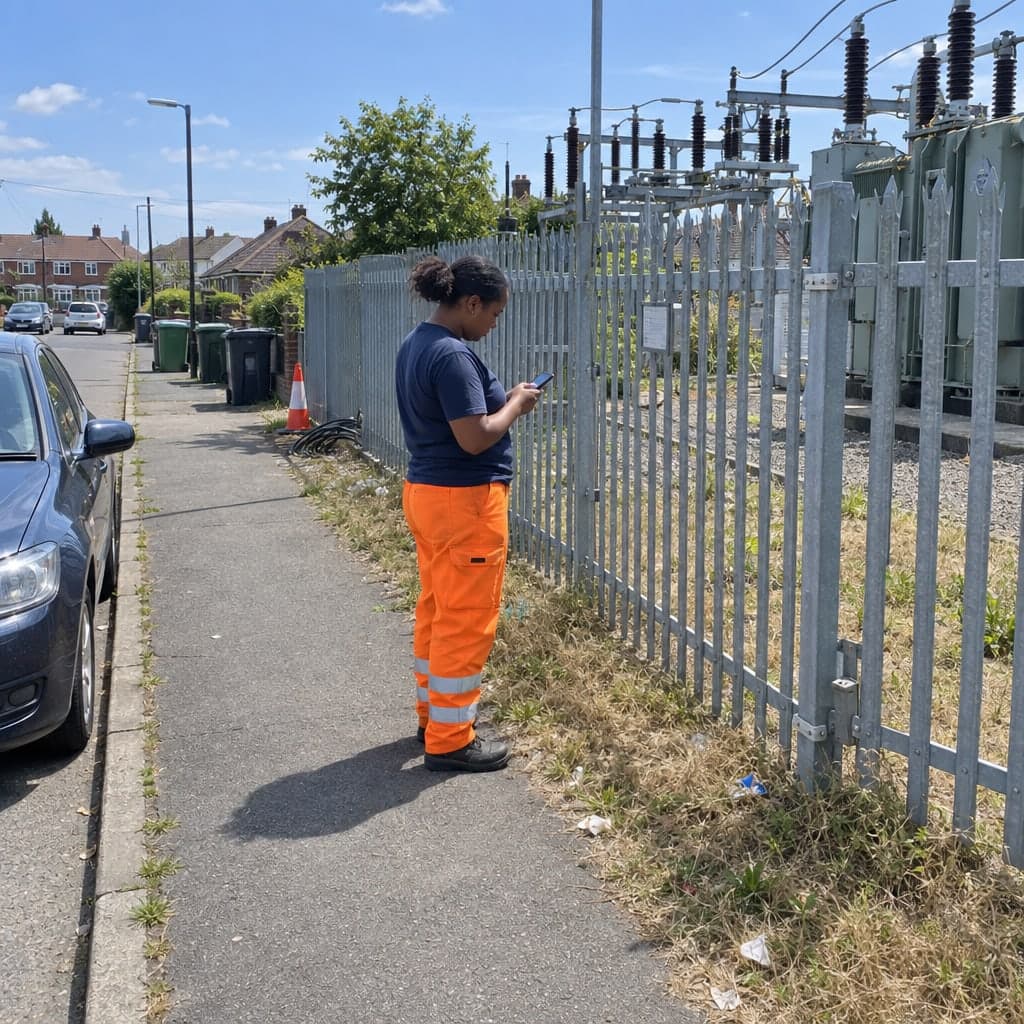
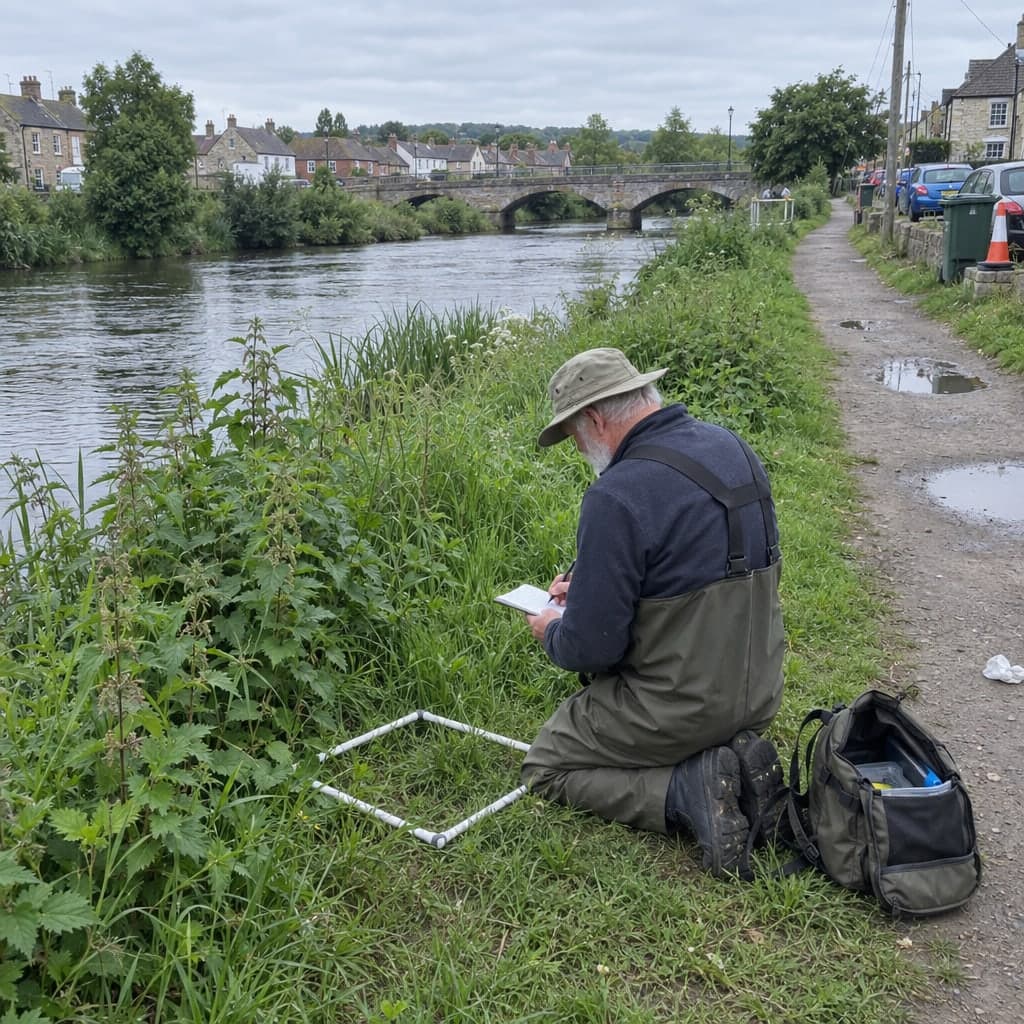
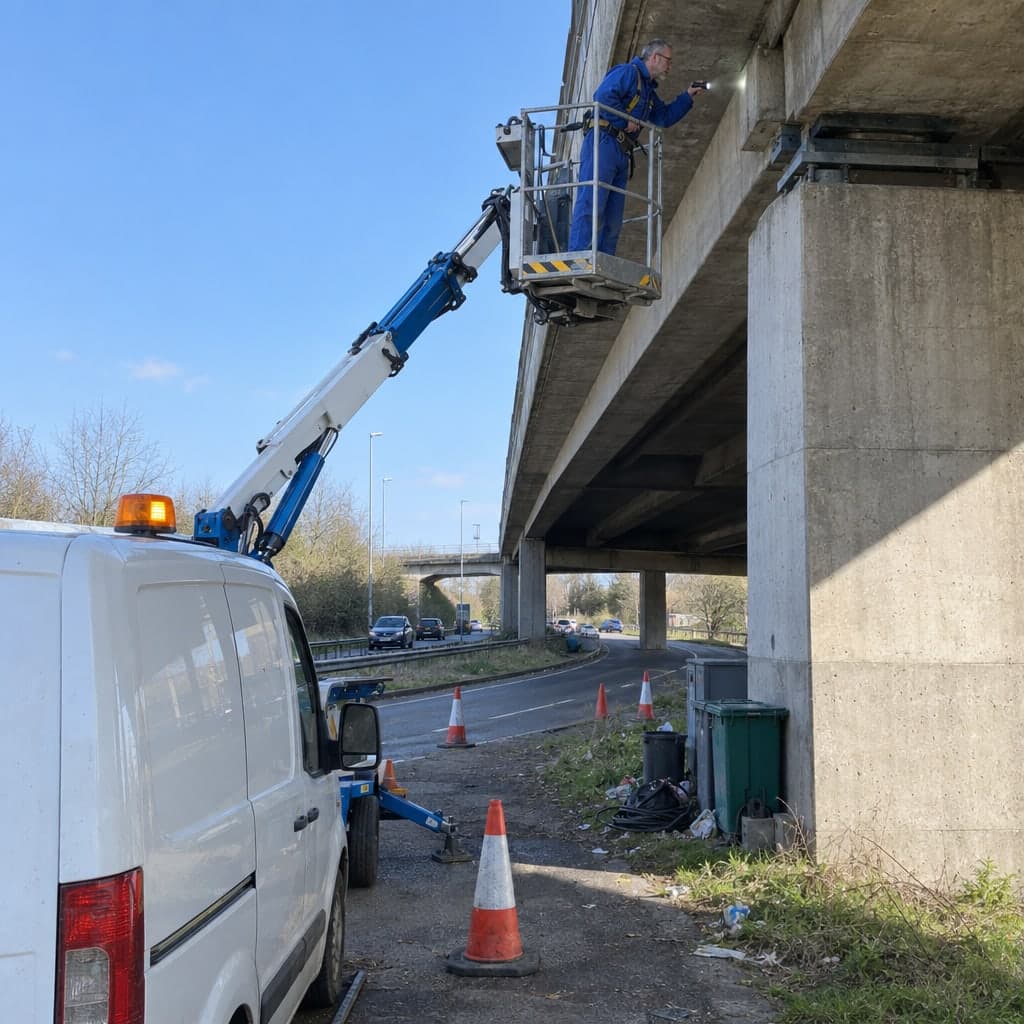
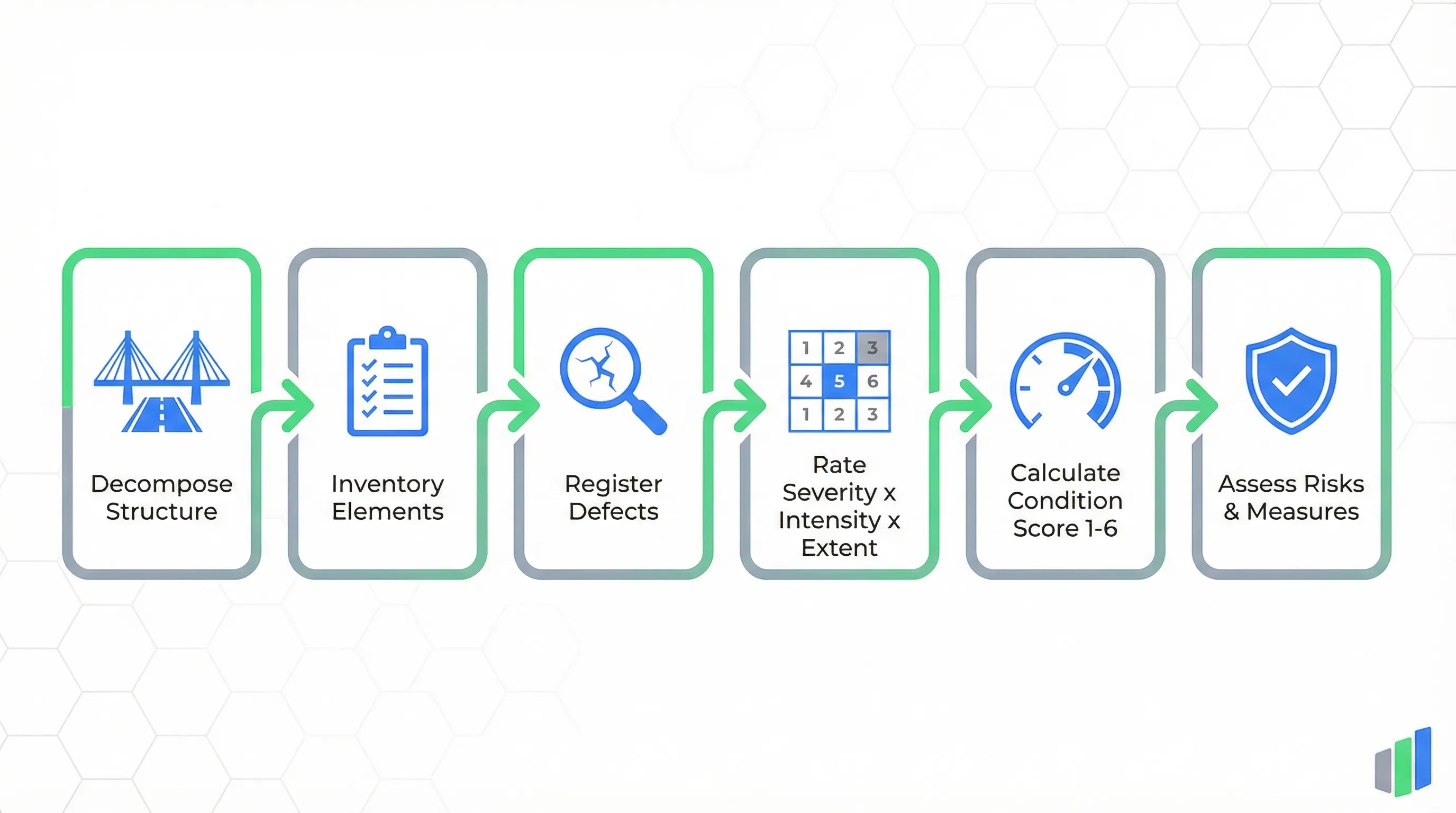
Inspectors walk or access the structure and systematically evaluate each element against the standardized defect catalog. For a concrete bridge, this means inspecting the deck slab, girders, bearings, expansion joints, parapets, abutments, and piers as separate elements. For each element, every observed defect is recorded and classified by three dimensions: severity (ernst), intensity (intensiteit), and extent (omvang). The algorithm defined in NEN 2767-1 then combines these three parameters into a single condition score per element on the 1-to-6 scale.
The element-level scores roll up to a structure-level condition score, weighted by the relative importance and replacement cost of each element. This hierarchical approach makes it possible to pinpoint exactly which component is driving the overall condition down — enabling targeted maintenance rather than blanket repairs. Rijkswaterstaat, ProRail, and most Dutch municipalities and provinces use NEN 2767-based frameworks to manage their civil infrastructure portfolios.
The standard is maintained by the Royal Netherlands Standardization Institute (NEN), which also publishes the infrastructure-specific extension NEN 2767-4.
CONDITION SCALE
The 6-Point Condition Score for Structures
Each structural element receives a condition score from 1 (excellent) to 6 (very poor). For infrastructure, the implications of each score level are tied directly to structural safety, traffic availability, and multi-year capital planning.
The condition score is the primary output of every NEN 2767 inspection. Unlike subjective engineering judgment, the score is determined algorithmically from the defect data — two inspectors recording the same defects will produce the same score. This reproducibility is what makes NEN 2767 suitable for portfolio-level asset management, where thousands of structures must be compared on a single, consistent scale to allocate limited maintenance budgets.
| Score | Condition | Description |
|---|---|---|
| 1 | Excellent | As-new condition. No defects observed. The structure performs fully as designed with no maintenance required. |
| 2 | Good | Incipient aging with minor cosmetic defects. Structural function unimpaired. Routine monitoring sufficient. |
| 3 | Fair | Local aging visible. Defects present but limited in scope. Maintenance can be planned within normal budget cycles. |
| 4 | Moderate | Advanced aging with clearly visible defects. Functionality occasionally compromised. Maintenance should be scheduled in the short term to prevent accelerated degradation. |
| 5 | Poor | Serious defects impacting structural integrity or traffic safety. Component approaching end of technical life. Urgent intervention required. |
| 6 | Very Poor | Critical failure or imminent collapse risk. The element no longer fulfills its function. Immediate closure, load restriction, or emergency repair necessary. |
The same 1-to-6 rating scale is used in the NEN 2767 condition assessment for buildings, with the consequences at each level focusing on structural safety and traffic availability for infrastructure.
DEFECT CLASSIFICATION
Severity, Intensity & Extent for Infrastructure
Every observed defect on a structural element is classified along three independent dimensions. Their combination determines the weighted impact on the condition score.
The three-dimensional defect classification is the methodological core of NEN 2767. Rather than asking an inspector to subjectively estimate "how bad is this element?", the standard decomposes that judgment into three orthogonal questions — each answered from a predefined scale. This decomposition is what makes NEN 2767 inspections reproducible across inspectors, time periods, and structure types.
Severity (Ernst)
How critical is the defect type from a structural or functional perspective? Severity is fixed per defect category in the standard — it is not an inspector judgment call. Corrosion of load-bearing reinforcement always carries higher severity than surface discoloration, regardless of how much of the element is affected. For infrastructure, the severity classification accounts for the structural role of the element: a crack in a bridge pier (primary load path) has different severity implications than the same crack type in a parapet (secondary element).
Intensity (Intensiteit)
How far has the defect progressed? Intensity captures the stage of development on a three-point scale. Stage 1 (initial) means the defect is barely visible — for example, hairline surface cracks in concrete. Stage 2 (advanced) means the defect is clearly developed — open cracks with measurable width, active corrosion staining. Stage 3 (end-stage) means the defect cannot progress further without component failure — rebar fully exposed with section loss, or concrete delamination with loose fragments.
Extent (Omvang)
What percentage of the element area or length is affected? Extent is recorded in five predefined ranges: incidental (<2%), local (2-10%), regular (10-30%), significant (30-70%), and general (70% or more). For infrastructure elements that span large surfaces — such as a bridge deck of 2,000 m2 — the extent classification ensures that a 50 m2 spalled area is not subjectively described as "minor" or "major" but objectively placed in the 2-10% bracket.
| Code | Dutch | English | Definition |
|---|---|---|---|
| G | Gering | Minor | Cosmetic defects with no functional or structural impairment. Examples: surface discoloration, biological growth, minor staining. |
| S | Serieus | Serious | Degradation affecting durability without immediate functional failure. Examples: weathering of protective coatings, early-stage carbonation, surface cracking. |
| E | Ernstig | Critical | Direct structural or functional impairment. Examples: reinforcement corrosion with section loss, structural cracking, bearing failure, scour undermining foundations. |
Severity is predefined per defect type in NEN 2767-2/4. The inspector selects the defect; the severity is auto-assigned.
| Stage | Dutch | English | Infrastructure Example |
|---|---|---|---|
| 1 | Beginstadium | Initial | Hairline cracks (<0.1 mm), surface discoloration, initial biological growth on concrete. |
| 2 | Gevorderd | Advanced | Open cracks (0.1-0.3 mm), active corrosion staining, delaminating protective coatings, joint sealant degradation. |
| 3 | Eindstadium | End-stage | Spalling with exposed rebar, section loss in steel, complete joint failure, scour undermining. |
| Value | Dutch | English | Range |
|---|---|---|---|
| 1 | Incidenteel | Incidental | < 2% |
| 2 | Plaatselijk | Local | 2% - 10% |
| 3 | Regelmatig | Regular | 10% - 30% |
| 4 | Aanzienlijk | Significant | 30% - 70% |
| 5 | Algemeen | General | ≥ 70% |
Extent is estimated as the percentage of the element surface or length affected by the specific defect.
Try this NEN 2767 form in Geocadra
We have a pre-built NEN 2767 inspection template ready to go. Sign up and start your first condition assessment today.
Free 14-day trial. No credit card required.
SCORE CALCULATION
How the Condition Score Is Calculated
The inspector does not directly assign a condition score. The algorithm in NEN 2767-1 determines it from the defect data.
The NEN 2767 condition score is a deterministic output, not an inspector opinion. For each recorded defect, the standard maps the combination of severity, intensity, and extent to a defect-level condition score using a predefined lookup matrix. When an element has only one defect, that defect score becomes the element score. When multiple defects are present on the same element — which is the norm for aging infrastructure — the standard applies an aggregation rule: the worst defect score dominates, but additional defects can push the score upward. For example, an element with a Score 3 defect and a Score 4 defect will receive Score 4, not an average of 3.5.
This aggregation logic reflects a key engineering principle: the weakest link determines the condition. A bridge girder with minor surface soiling (Score 2) but one area of deep reinforcement corrosion (Score 5) is functionally a Score 5 girder — the soiling does not offset the corrosion. The standard encodes this principle mathematically so that every inspector arrives at the same conclusion.
At the structure level, element scores are weighted by their relative importance and replacement value to produce an overall structure condition score. Load-bearing primary elements (foundations, piers, deck slabs) carry higher weight than secondary elements (railings, drainage channels). This weighting ensures that the structure-level score reflects actual structural risk rather than a simple arithmetic average of all element scores.
Similar multi-dimensional damage rating approaches are used in the German DIN 1076 bridge inspection standard, which uses structural safety, traffic safety, and durability as three damage dimensions.
RISK ASSESSMENT
Risk-Based Maintenance Prioritization
A poor condition score alone does not determine maintenance urgency. NEN 2767 includes a risk assessment framework to prioritize interventions.
Infrastructure asset managers face a common problem: hundreds of elements across dozens of structures may all need attention, but budgets are finite. NEN 2767 addresses this through an integrated risk assessment that supplements the technical condition score. For each element with identified defects, the inspector evaluates risk across two primary dimensions defined in the form: safety and health risk (veiligheid), and business process risk (bedrijfsproces).
Safety risk captures the likelihood and consequence of the defect causing injury or endangering human health. A corroded railing on a pedestrian bridge scores high on safety risk even if its condition score is only 4, because failure could lead to a fall from height. Business process risk captures the impact on the primary function the structure serves. A degraded expansion joint on a major highway bridge creates high business process risk because repair requires lane closures affecting traffic flow, while the same defect on a rural farm access bridge has minimal process impact.
The combination of condition score and risk rating produces a maintenance priority matrix. An element with Condition 5 and high safety risk demands immediate intervention, while an element with Condition 5 but low risk across all dimensions can be deferred to the next budget cycle. This prioritization framework is what transforms NEN 2767 from a pure condition inventory into an actionable maintenance management tool.
Based on the risk assessment, the inspector recommends one of three measure types: preventive maintenance (preventief) to slow further degradation, corrective maintenance (correctief) to restore the element to acceptable condition, or full replacement (vervanging) when the element has reached end of life. Each measure is assigned an urgency — immediate, within one year, or within two to five years — and an estimated cost, feeding directly into the multi-year maintenance plan.
For more information on infrastructure-related inspection standards, see our standards directory, which covers all supported inspection frameworks.
DIGITAL WORKFLOW
Digitize NEN 2767 Structures with Geocadra
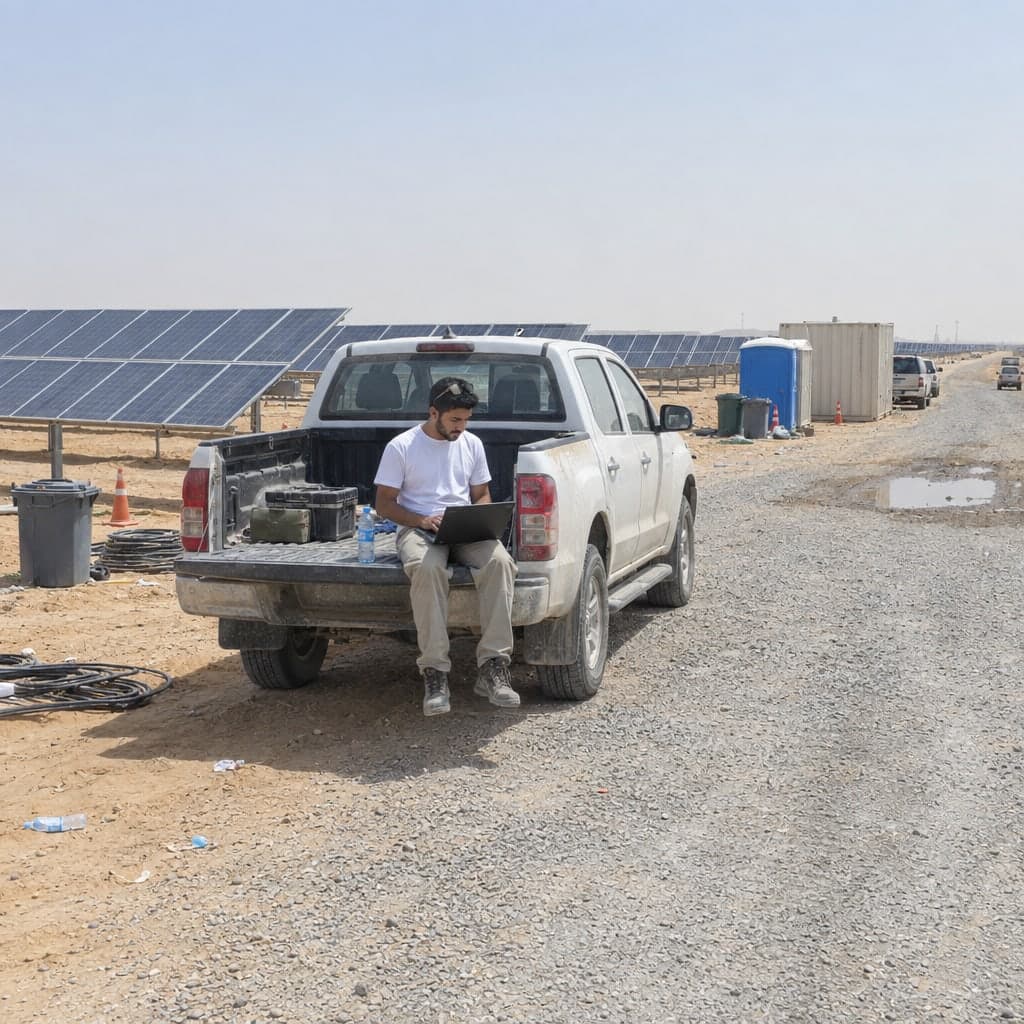
Infrastructure inspections demand reliable field data capture under challenging conditions — on bridge decks, inside tunnels, along quay walls. Geocadra replaces paper-based workflows with a structured digital process designed for the field.
Infrastructure-specific form templates
Pre-configured NEN 2767 forms with element hierarchies for bridges, tunnels, quay walls, locks, and culverts. Inspectors select elements from the standardized decomposition — drop-downs for severity, intensity, and extent ensure consistent defect classification even when working in confined or exposed conditions.
Photo-linked defect records with GPS
Every defect observation is tied to geotagged photos and a precise location on the structure. Reviewers see exactly where each crack, spall, or corrosion patch sits — not just a row in a spreadsheet. For linear structures like quay walls, defects are plotted along the chainage.
Automatic condition score calculation
Geocadra applies the NEN 2767-1 scoring algorithm in real time as inspectors record defects. The condition score updates automatically — no post-processing in Excel. Element-level and structure-level scores are available immediately after the inspection is completed.
Multi-year degradation tracking
Track condition scores across inspection cycles for every element and structure. Visualize degradation trends to identify structures that are aging faster than expected and shift from reactive emergency repairs to planned, predictive maintenance programs.
Risk-based prioritization reports
Combine condition scores with safety and business process risk ratings to generate prioritized maintenance plans. Export reports with recommended measures, urgency levels, and cost estimates for direct integration into multi-year capital budgets.
QUESTIONS
Frequently Asked Questions
What is NEN 2767 for structures?
NEN 2767 for structures applies the Dutch condition assessment methodology to infrastructure and civil engineering assets such as bridges, tunnels, quay walls, and locks. It uses the same 1-to-6 condition score and defect classification system as the building variant, but with decomposition hierarchies and defect catalogs specific to infrastructure elements.
How does NEN 2767 Structures differ from NEN 2767 for buildings?
The core methodology — severity, intensity, extent, and the scoring algorithm — is identical. The difference lies in the decomposition hierarchy (NEN 2767-4 instead of NEN 2767-2), the element catalogs (piers, deck slabs, bearings vs. walls, roofs, windows), and the defect lists which reflect infrastructure-specific failure modes like scour, chloride-induced corrosion, and bearing displacement.
Who uses NEN 2767 for infrastructure condition assessment?
Rijkswaterstaat (the Dutch national infrastructure agency), ProRail (rail infrastructure), provincial authorities, municipalities, and water boards all use NEN 2767-based frameworks to manage bridges, tunnels, locks, quay walls, and other civil engineering structures across the Netherlands.
What is the difference between severity and intensity in NEN 2767?
Severity is a fixed property of the defect type — it reflects inherent criticality (minor, serious, or critical) and is predefined in the standard. Intensity is an inspector observation that captures how far the defect has progressed: initial stage, advanced, or end-stage. A critical defect at initial intensity has different implications than a critical defect at end-stage.
How is the condition score calculated in NEN 2767?
The inspector records defects and classifies each by severity, intensity, and extent. The NEN 2767-1 algorithm maps each combination to a defect score via a lookup matrix. When multiple defects exist on one element, the worst score dominates. Element scores are then weighted by structural importance to produce the overall structure score.
How often should NEN 2767 structure inspections be performed?
Typical inspection cycles are every 3 to 6 years for a full condition assessment, depending on the asset type and its condition history. Structures with scores of 4 or higher, or those carrying high safety risk, may require annual monitoring inspections to track degradation between full assessment cycles.
Can NEN 2767 Structures be combined with other inspection standards?
Yes. NEN 2767 is frequently used alongside DIN 1076 for cross-border bridge portfolios, and with CROW guidelines for pavement and road furniture condition assessment. The modular scoring approach allows NEN 2767 data to feed into broader asset management systems such as iAMPro and Ultimo.
In practice
See how the round runs in Geocadra
The solution page shows this inspection regime on real open data: the import, the form, the round, the record per asset and the export.
Main and routine inspections of bridges, walls, roads and signs on a map, with every inspection appended to the structureOpen the solution page: Bridges, Roads & StructuresTRY IT FREE
Digitize your NEN 2767 inspections
Replace paper forms and spreadsheets with structured digital inspections, built for standards like NEN 2767.
No credit card requiredFree trial included