BVC Tree Safety Inspection
The Dutch standard for visual tree safety inspection based on VTA methodology and CROW guidelines.
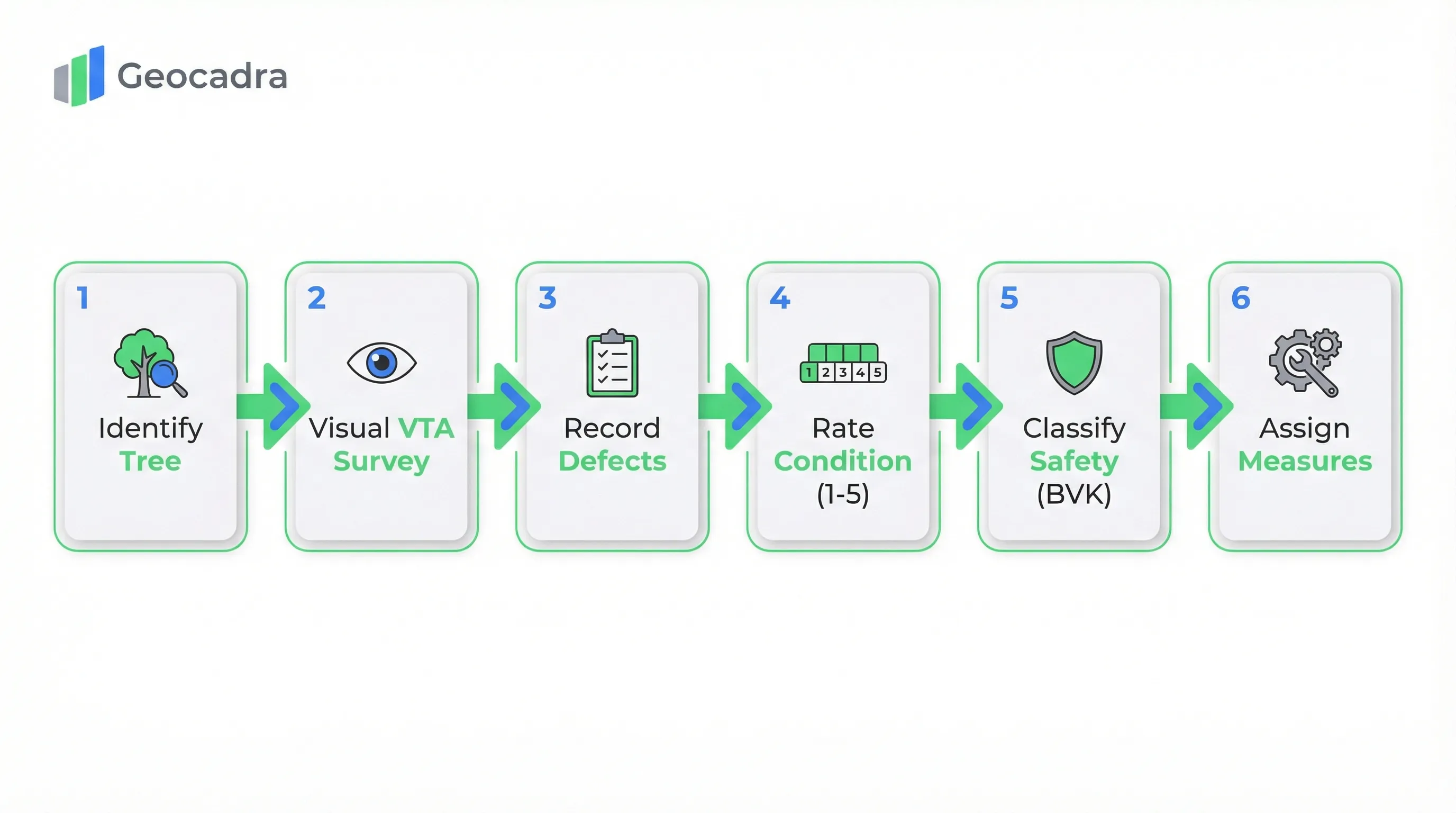
The Boomveiligheidscontrole (BVC) is the primary method used in the Netherlands for assessing tree safety and fulfilling the legal Duty of Care (Zorgplicht) under Art. 6:162 BW of the Dutch Civil Code. Based on the Visual Tree Assessment (VTA) method developed by Claus Mattheck, the BVC classifies every tree into one of three safety categories — Boom zonder gebreken, Attentieboom, or Risicoboom — driving inspection frequency, required measures, and urgency timelines. This guide covers tree identification, the VTA-based defect catalog, the condition and vitality scale, safety classification, prescribed measures, and compliance with the CROW Richtlijn and SUF-BVC data exchange standard.
What is BVC?
The Boomveiligheidscontrole (BVC) is the Dutch visual tree safety inspection standard based on VTA (Visual Tree Assessment) methodology. Following CROW guidelines and the SUF-BVC data exchange format, inspectors classify trees into three safety categories — Boom zonder gebreken, Attentieboom, or Risicoboom — to fulfill the legal Duty of Care (Zorgplicht) under the Dutch Civil Code.
- Full Name
- Boomveiligheidscontrole (Visual Tree Assessment)
- Issuing Body
- CROW / Norminstituut Bomen / Groenkeur
- Current Revision
- SUF-BVC (current)
TREE IDENTIFICATION
Tree Data Collection Under SUF-BVC Standards
Before the visual inspection begins, the inspector verifies and records the tree's physical attributes using standardized CROW classes. These data fields feed directly into municipal tree databases and asset management systems.
Every BVC inspection starts with positive identification of the tree. The Boomnummer (tree number) is the unique administrative identifier that links the field inspection record to the municipal GIS database. In practice, this number is typically pre-loaded from the asset register, and the inspector verifies that the physical tree matches the recorded position. Species identification uses the scientific name (Boomsoort) — for example, Quercus robur for pedunculate oak or Tilia x europaea for common lime — because common names vary regionally across the Netherlands. Correct species identification is critical for the inspection because certain species have characteristic failure modes: willows (Salix) are prone to crown breakage, beeches (Fagus) are susceptible to Meripilus giganteus root decay, and horse chestnuts (Aesculus) frequently develop bark inclusion defects.
The Stamdiameter (stem diameter) is measured at 1.30 meters height — the international standard known as DBH (diameter at breast height). The CROW guideline defines seven diameter classes ranging from 0-10 cm for young plantings to over 100 cm for monumental trees. Diameter directly correlates with the tree's potential hazard radius: a large-diameter tree with a defect can cause far more damage than a small one with the same defect type. The Boomhoogte (tree height) is recorded in seven classes from "tot 6 m" (up to 6 meters) to "24 m en hoger" (24 meters and above) per the SUF-BVC standard. Height determines the fall zone and therefore the target area for risk assessment.
The Verschijningsvorm (growth form) captures the tree's management type, which directly affects the expected crown architecture and associated failure risks. A Knotboom (pollard) is regularly headed back and develops characteristic knuckle joints that require different inspection criteria than a Vrij uitgroeiend (free-growing) tree. Leiboom (espalier) and Vormboom (topiary) trees are architecturally shaped and may have pruning wounds that create entry points for decay fungi. Zuilvorm (columnar) and Kandelaber (candelabra) forms have specific crown dynamics in wind loading. The Plantjaar (planting year) provides age context — a 150-year-old oak in poor condition has different management implications than a 15-year-old tree with the same vitality score.
The BVC data fields are defined in the CROW Richtlijn Boomveiligheidsregistratie and the SUF-BVC data exchange standard.
DEFECT CATALOG
VTA Defect Types, Locations, and Failure Consequences
The BVC uses a structured defect recording system where each observed defect is logged with its anatomical location on the tree, its type based on VTA symptoms, and its potential failure consequence. This three-part structure ensures that every defect is actionable.
The VTA (Visual Tree Assessment) method developed by Claus Mattheck is the scientific foundation of the BVC. VTA works on the principle that trees exhibit external symptoms — the "body language of trees" — that indicate internal mechanical defects. The inspector walks around the tree and examines it systematically from crown to roots, looking for visual indicators of structural compromise. Each defect is first assigned a Plaats (location): Kroon (crown), Stam (trunk), Stamvoet (root collar/base), or Maaiveld (root zone/soil level). This four-zone anatomy is fundamental because the failure consequence varies dramatically by location — a cavity in the crown risks branch failure, while the same cavity at the root collar risks total tree instability.
The Type Gebrek (defect type) field captures the specific VTA symptom observed. A Plakoksel (included bark) occurs where two stems or a stem and branch grow together without forming a proper union — the bark is trapped between the two parts, creating a structural weakness that can split under wind or snow load. Dood hout (dead wood) indicates branches that have lost all cambial activity and are susceptible to brittle fracture without warning. Holte / Inrotting (cavity or internal decay) reveals that the tree's wood is being broken down by fungi, reducing the load-bearing cross-section. Scheur (crack) is a separation in the wood grain that can propagate under mechanical stress. Zwam / Vruchtlichaam (fungus or fruiting body) is the most significant indicator of internal decay — the presence of species like Ganoderma, Inonotus, or Meripilus often means extensive wood degradation invisible from the surface.
Mechanische schade (mechanical damage) covers wounds from vehicle impact, mower strikes, construction work, or vandalism that breach the bark barrier and expose sapwood to infection. Wortelschade (root damage) includes severed roots from excavation, soil compaction from heavy machinery, grade changes that smother roots, or root decay. Root damage is particularly insidious because it can compromise the tree's entire anchorage system while remaining invisible at the surface. Each defect also receives a Gevolg (consequence) classification that predicts the failure mode: Takbreuk (branch failure), Stambreuk (trunk failure), or Instabiliteit / Windworp (instability or uprooting). The consequence determines the potential severity of harm — branch failure may injure a pedestrian, while trunk failure or uprooting can be fatal and cause major property damage.
| Zone | Dutch | Inspection Focus |
|---|---|---|
| Crown | Kroon | Dead wood, included bark at branch junctions, crown dieback, hanging branches, asymmetric loading |
| Trunk | Stam | Cavities, cracks, fungal fruiting bodies, bark damage, leaning, bulges indicating internal decay |
| Root collar | Stamvoet | Basal cavities, root plate lifting, fungal brackets (Ganoderma, Meripilus), bark necrosis |
| Root zone / Soil | Maaiveld / Wortels | Severed roots, soil heaving, compaction damage, grade changes, root decay indicators |
Each defect must be assigned to exactly one location zone. Multiple defects at different locations are logged as separate entries in the repeatable defect group.
| Defect Type | Dutch | Description |
|---|---|---|
| Included bark | Plakoksel | Bark trapped between co-dominant stems or branch junctions, preventing proper wood union and creating a structural weak point. |
| Dead wood | Dood hout | Branches that have lost all living tissue. Brittle and prone to sudden fracture without warning, especially in wind or wet conditions. |
| Cavity / Decay | Holte / Inrotting | Internal wood degradation reducing the load-bearing cross-section. May be visible as an opening or detectable by sounding. |
| Crack | Scheur | Separation in the wood grain that can propagate under wind or snow loading. Longitudinal cracks are particularly dangerous in stems. |
| Fungus / Fruiting body | Zwam / Vruchtlichaam | Presence of wood-decay fungi (e.g., Ganoderma, Inonotus, Meripilus). Indicates extensive internal decay often invisible externally. |
| Mechanical damage | Mechanische schade | Wounds from vehicles, mowers, construction, or vandalism that breach the bark barrier and expose sapwood to infection. |
| Root damage | Wortelschade | Severed, compacted, or decayed roots compromising the tree's anchorage system. Often invisible at the surface level. |
The defect type list follows common VTA practice for Dutch municipal tree management. Additional defect types may be added through the free-text description field.
The VTA methodology was developed by Claus Mattheck and forms the foundation of the VTA Mattheck Tree Assessment. Similar defect recording systems are found in the FLL Baumkontrollrichtlinie for the German context.
Try this BVC form in Geocadra
We have a pre-built BVC inspection template ready to go. Sign up and start your first condition assessment today.
Free 14-day trial. No credit card required.
CONDITION & VITALITY
Assessing Tree Health: The Five-Level Condition Scale
Beyond structural safety, the BVC records each tree's biological condition and vitality. The five-level scale assesses the tree's physiological health and vigor, which informs long-term management decisions and life expectancy estimates.
The Conditie / Vitaliteit (condition or vitality) field is a five-level rating from Goed (Good) to Zeer slecht / Dood (Very Poor or Dead). This is distinct from the safety classification — a tree can be in poor biological condition but still be structurally safe if it has no mechanical defects, and conversely a vital, healthy tree can be a Risicoboom if it has a large cavity at the base. The condition assessment looks at crown density, leaf size and color, shoot extension growth, dieback percentage, and overall vigor. A tree rated Goed (Good) has a full crown with strong growth and less than 10% canopy loss. Voldoende (Sufficient) indicates normal growth with minor dead wood and slight crown transparency — the most common rating for mature urban trees.
Onvoldoende (Insufficient) signals stagnating growth with clear crown transparency or progressive dieback — this tree requires attention and may have a reduced life expectancy. Slecht (Poor) indicates severe decline with more than 30-50% dieback and limited remaining useful life. Zeer slecht / Dood (Very Poor or Dead) means the tree shows no or almost no life functions. The Toekomstverwachting (life expectancy) field provides a forward-looking estimate: more than 15 years, 5-15 years, 1-5 years, or less than 1 year (removal recommended). This estimate is critical for the financial valuation of the tree — Dutch municipalities use the "W-cijfer" (valuation number) system where life expectancy directly affects the calculated monetary value of the tree, which in turn influences legal liability calculations when damage occurs.
| Rating | Dutch | Description |
|---|---|---|
| Good | Goed (Volledige kroon) | Full crown, vigorous growth, less than 10% canopy loss. Excellent specimen with no signs of decline. |
| Sufficient | Voldoende (Normale groei) | Normal growth, minor dead wood, slight crown transparency. Typical condition for mature urban trees. |
| Insufficient | Onvoldoende (Verminderd) | Stagnating growth, clear crown transparency, progressive dieback. Requires monitoring and management attention. |
| Poor | Slecht (Sterke achteruitgang) | Severe decline, more than 30-50% dieback, substantial dead wood. Limited remaining life expectancy. |
| Very Poor / Dead | Zeer slecht / Dood | No or minimal life functions. Tree is dead or functionally non-viable. Removal typically recommended. |
Condition rating is independent of safety classification. A biologically poor tree may still be structurally safe, while a vital tree may harbor hidden mechanical defects.
SAFETY CLASSIFICATION
Boomveiligheidsklasse: The Three-Tier Tree Safety Classification
The Boomveiligheidsklasse (BVK) is the single most important output of every BVC inspection. It determines whether a tree is safe, requires increased monitoring, or demands immediate intervention — and it directly affects the tree owner's legal liability.
The BVK system classifies every inspected tree into exactly one of three categories. Boom zonder gebreken (Tree without defects) means the inspector found no foreseeable safety risks during the visual assessment. The tree is cleared until the next regular inspection cycle, which is typically every three years. This does not mean the tree is perfect — it may have minor biological issues or aesthetic imperfections — but no mechanical defects were observed that could lead to branch failure, trunk failure, or uprooting. This is the most common classification for healthy urban tree populations, typically representing 60-75% of trees in a well-maintained municipality.
Attentieboom (Attention Tree) indicates that defects are present but do not pose an acute or unacceptable risk at the time of inspection. However, the defects require increased monitoring because they may worsen over time. The key management consequence is that the inspection frequency increases from the standard three-year cycle to an annual cycle. Examples include a minor bark inclusion at a branch junction that is currently stable, early-stage fungal colonization that has not yet significantly reduced the wood cross-section, or a small cavity that needs monitoring for expansion. The Attentieboom classification is the critical "watchlist" tier — these trees are safe today but could become Risicobomen if their defects progress.
Risicoboom (Risk Tree) means defects pose an unacceptable risk that must be addressed through active measures. The inspector must prescribe a specific Maatregel (measure) and assign an Urgentie (urgency) timeline. A Risicoboom classification triggers a legal obligation for the tree owner — under the Duty of Care (Zorgplicht), failing to act on a known Risicoboom finding can establish liability if the tree subsequently causes injury or damage. This is the classification that carries the greatest legal weight in Dutch tort law, as documented in case law from the Hoge Raad (Dutch Supreme Court). For practitioners, the transition from Attentieboom to Risicoboom is the most consequential judgment call in the entire BVC process.
| Class | Dutch | Description | Inspection Cycle |
|---|---|---|---|
| Safe | Boom zonder gebreken | No foreseeable safety risks. No mechanical defects observed that could lead to failure. | 3 years (standard) |
| Attention | Attentieboom | Defects present but not acutely dangerous. Requires increased monitoring frequency. | 1 year |
| Risk | Risicoboom | Defects pose unacceptable risk. Active measures (pruning, cabling, removal) required. | Per measure urgency |
The BVK is the legally binding safety output of the BVC inspection. A Risicoboom classification triggers a Duty of Care obligation for the tree owner under Art. 6:162 BW of the Dutch Civil Code.
For a quantitative approach to tree risk assessment as an alternative to the categorical BVC classification, see the QTRA Tree Risk Assessment. All tree inspection standards are listed in the standards directory.
MEASURES & URGENCY
Prescribed Measures and Urgency Timelines
When a tree is classified as a Risicoboom, the inspector must prescribe a specific corrective measure and assign an urgency level that dictates when that measure must be completed.
The Maatregel (measure) field offers seven standardized options drawn from the SUF-BVC data exchange format. Geen maatregel (no measure) applies to trees classified as Boom zonder gebreken. Hercontrole (re-inspection) schedules an additional visual check before the next regular cycle — useful when conditions are borderline or when seasonal factors (leaf-on versus leaf-off) may reveal different symptoms. Nader onderzoek (further investigation) triggers a follow-up assessment using specialized diagnostic tools such as a pulling test (trekproef), sonic tomography, or resistance drilling (Resistograph) — techniques that go beyond the visual scope of a standard BVC to quantify internal decay or root stability. This is a common prescription when the inspector detects fungal fruiting bodies at the base but cannot determine the extent of internal decay from external symptoms alone.
Veiligheidssnoei (safety pruning) is the most common physical intervention — it includes removing dead wood, reducing overextended branches, eliminating included bark junctions, and thinning the crown to reduce wind sail area. Boom verwijderen (tree removal) is prescribed when no other measure can restore the tree to an acceptable safety level, typically when there is extensive basal decay, severe root damage, or complete structural failure is imminent. Verankering aanbrengen (install cabling or bracing) involves installing dynamic or static cable systems to prevent co-dominant stems from splitting or to support structurally compromised branches. Verankering controleren (check existing cabling) is prescribed when a tree already has an installed cable system that requires periodic inspection to verify the anchors and cables remain functional.
The Urgentie (urgency) field defines the deadline for completing the prescribed measure. Acuut (acute or immediate) means the same day or within 24 hours — this is reserved for situations where failure is imminent, such as a leaning tree with exposed roots after a storm. Binnen 1 maand (within 1 month) is high priority, typically for large dead wood over busy footpaths or roads. Binnen 3 maanden and Binnen 6 maanden represent medium and low priority respectively. Binnen 12 maanden (within 12 months) places the measure on the regular maintenance schedule. The Frequentie (next inspection frequency) field is set independently: Attentiebomen receive a 1-year cycle, standard trees receive a 3-year cycle, and in some cases a 5-year cycle may be applied to low-risk tree populations in remote locations.
| Measure | Dutch | When Applied |
|---|---|---|
| No measure | Geen maatregel | Boom zonder gebreken — no safety risks found. |
| Re-inspection | Hercontrole | Borderline findings requiring a follow-up visual check outside the regular cycle. |
| Further investigation | Nader onderzoek | Suspected internal decay requiring sonic tomography, pulling test, or resistance drilling. |
| Safety pruning | Veiligheidssnoei | Dead wood removal, crown thinning, elimination of included bark junctions, or reduction of overextended branches. |
| Tree removal | Boom verwijderen | Structural integrity beyond repair — extensive basal decay, severe root damage, or imminent collapse. |
| Install cabling | Verankering aanbrengen | Dynamic or static cable systems to prevent splitting of co-dominant stems or to support compromised branches. |
| Check cabling | Verankering controleren | Periodic verification that existing cable anchors and hardware remain functional and properly tensioned. |
Measures are prescribed per the SUF-BVC standard. The urgency level (Acuut to Binnen 12 maanden) determines the deadline for completing each measure.
| Level | Dutch | Timeline | Example Trigger |
|---|---|---|---|
| Acute | Acuut (Direct) | Same day / 24 hours | Leaning tree with exposed roots, large hanging branch over road. |
| High | Binnen 1 maand | Within 1 month | Large dead wood over busy pedestrian path, significant crack in main stem. |
| Medium | Binnen 3 maanden | Within 3 months | Moderate cavity requiring monitoring, included bark needing crown reduction. |
| Low | Binnen 6 maanden | Within 6 months | Minor pruning needs, early-stage root damage requiring soil decompaction. |
| Routine | Binnen 12 maanden | Within 12 months | Scheduled maintenance pruning, cable system check, crown thinning for light transmission. |
Urgency is conditionally required when a measure other than "Geen maatregel" is prescribed. Acute measures create immediate legal obligations under the Duty of Care.
Inspectors are certified by Groenkeur as Boom Veiligheid Controleur and must follow the CROW guidelines.
QUESTIONS
Frequently Asked Questions
What is a Boomveiligheidscontrole (BVC)?
A BVC is the Dutch standard visual tree safety inspection based on VTA (Visual Tree Assessment) methodology. It classifies trees into three safety categories — Boom zonder gebreken, Attentieboom, or Risicoboom — to fulfill the legal Duty of Care (Zorgplicht) under Art. 6:162 BW. It is the primary tree risk management tool used by Dutch municipalities.
What is the difference between Attentieboom and Risicoboom?
An Attentieboom (Attention Tree) has defects that are not yet acutely dangerous but require annual monitoring instead of the standard three-year cycle. A Risicoboom (Risk Tree) has defects posing unacceptable risk, requiring active measures such as pruning, cabling, or removal within a specified urgency timeline.
How often should a BVC tree inspection be performed?
The standard inspection cycle is every three years for trees without defects (Boom zonder gebreken). Attentiebomen are inspected annually due to their monitored defects. Risicobomen are inspected per the urgency timeline assigned to their prescribed measure. Some low-risk populations may be placed on a five-year cycle.
What qualifications are needed to perform a BVC inspection?
In the Netherlands, BVC inspectors are typically certified by Groenkeur as Boom Veiligheid Controleur (BVC). This certification requires training in VTA methodology, knowledge of tree biology and biomechanics, and familiarity with the CROW Richtlijn Boomveiligheidsregistratie and SUF-BVC data standards.
What is the Duty of Care (Zorgplicht) for tree owners?
Under Art. 6:162 BW of the Dutch Civil Code, tree owners are liable for damage caused by their trees. The Zorgplicht requires owners to take reasonable measures to prevent foreseeable harm. Regular BVC inspections and timely follow-up on Risicoboom findings demonstrate that the owner has fulfilled this legal obligation.
What happens when a BVC inspector finds a fungal fruiting body (Zwam)?
A fungal fruiting body indicates internal wood decay that may be far more extensive than what is visible. The inspector typically prescribes "Nader onderzoek" (further investigation) using sonic tomography or resistance drilling to quantify the remaining sound wood. Depending on results, the tree may be classified as Risicoboom with measures ranging from pruning to removal.
What is the SUF-BVC data exchange format?
SUF-BVC (Standaard Uitwisselingsformaat Boomveiligheidscontrole) is the XML-based data exchange standard used by Dutch municipalities and software vendors to ensure uniform tree inspection data. It defines standardized field names, option values, and data structures so that inspection results are compatible across different systems and organizations.
In practice
See how the round runs in Geocadra
The solution page shows this inspection regime on real open data: the import, the form, the round, the record per asset and the export.
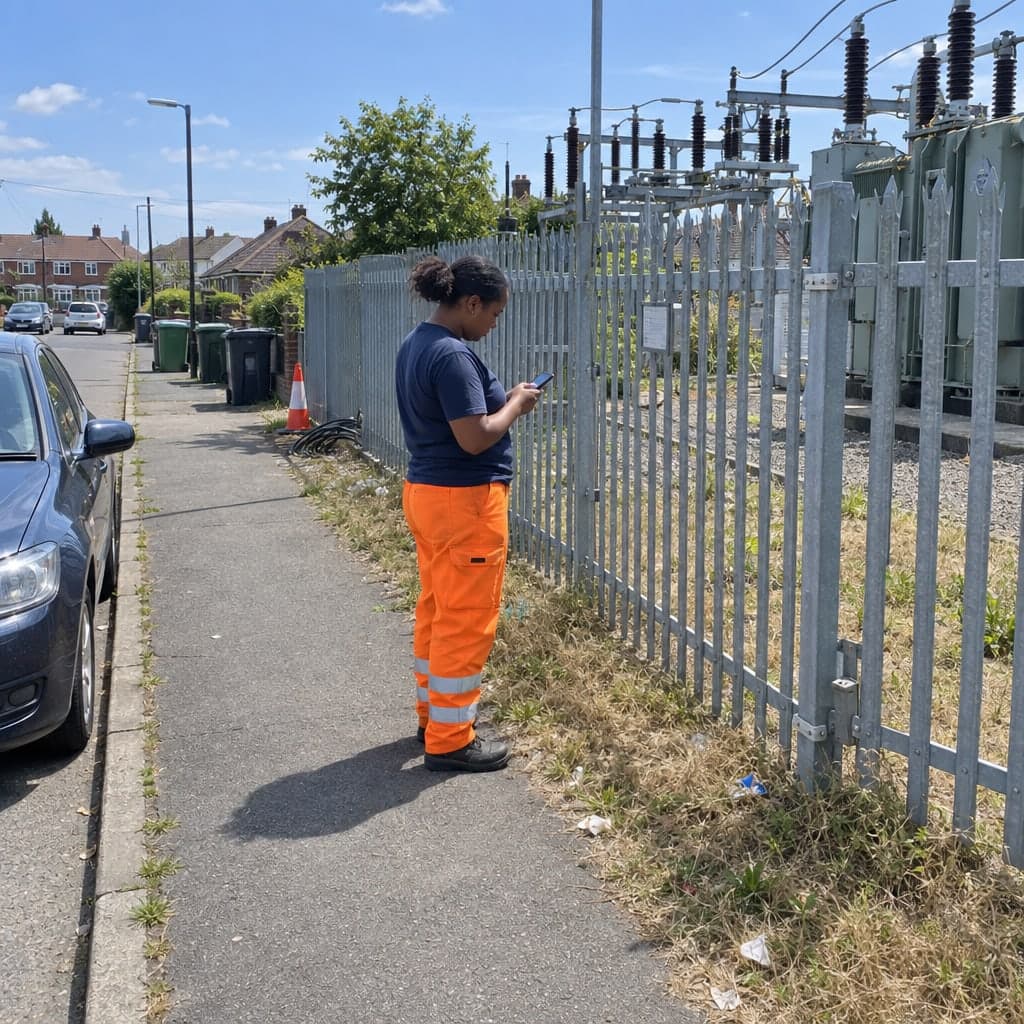
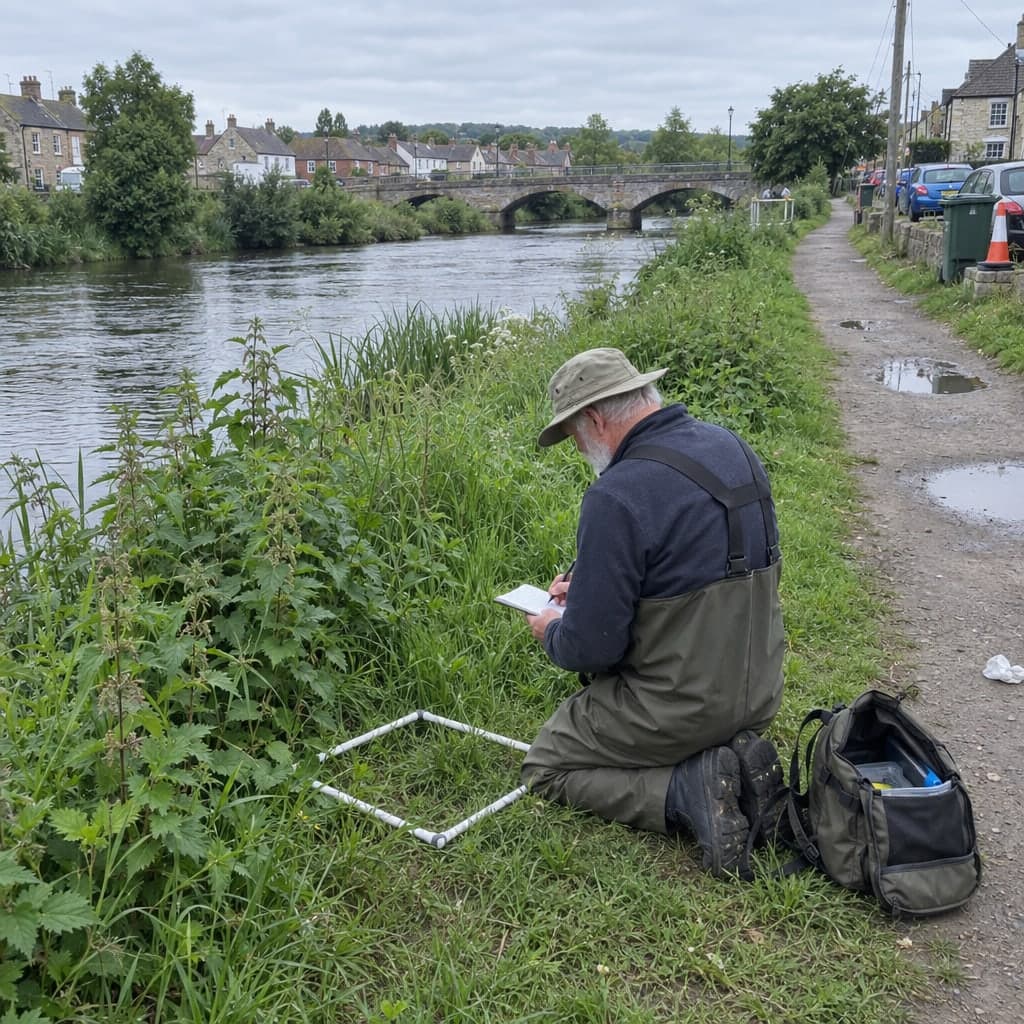
Regular tree checks, biotope mapping and ecological surveys on a map, with every visit appended to the tree or the siteOpen the solution page: Trees, Habitats & EcologyTRY IT FREE
Digitize your BVC inspections
Replace paper forms and spreadsheets with structured digital inspections, built for standards like BVC.
No credit card requiredFree trial included