NYC LL 126 PIPS Parking Inspection
New York City’s mandatory six-year structural inspection program for every parking garage and parking structure.
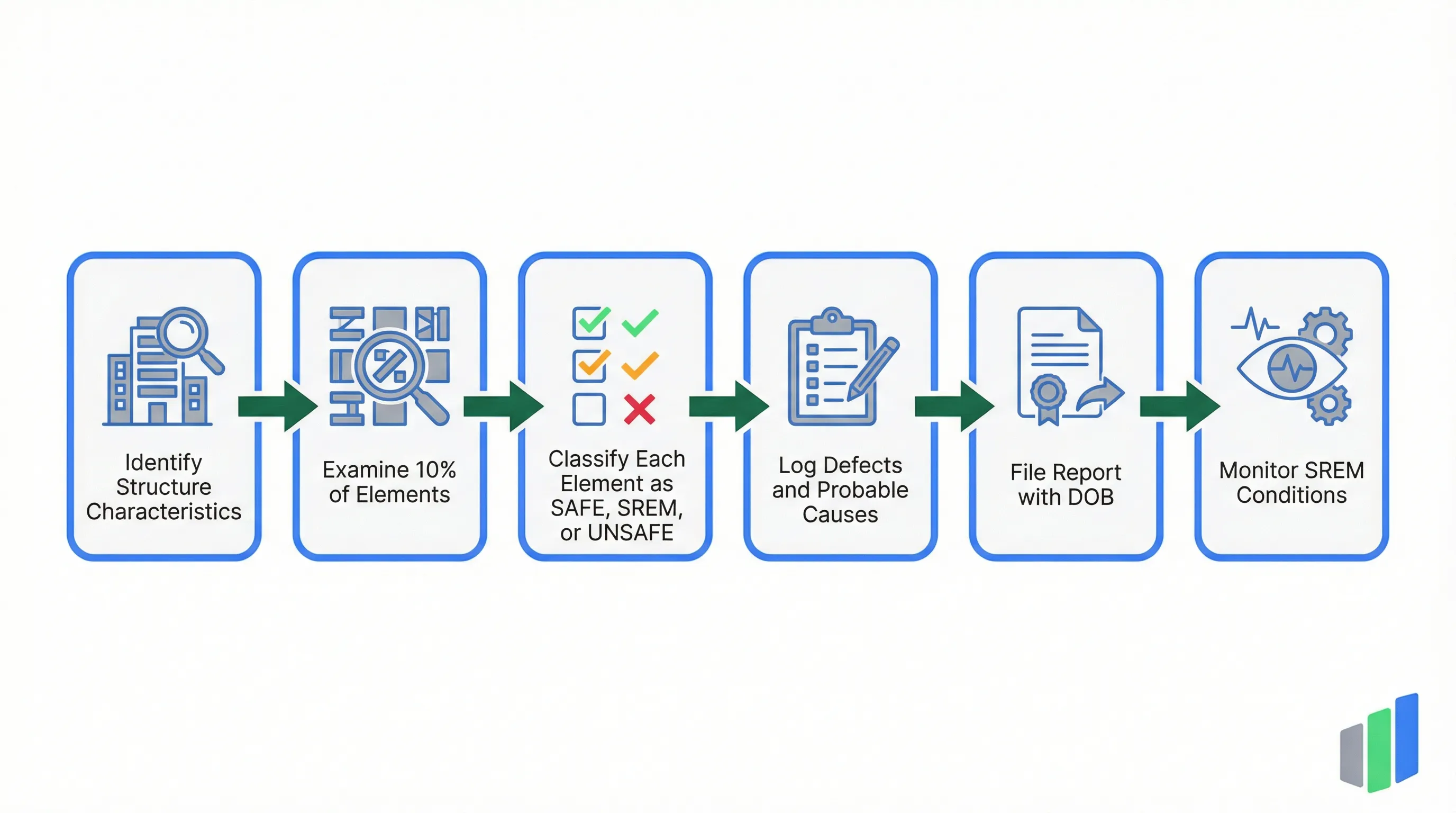
NYC Local Law 126 of 2021 established the Periodic Inspection of Parking Structures (PIPS) program, requiring owners of all parking structures in New York City to engage a Qualified Parking Structure Inspector (QPSI) for a comprehensive condition assessment every six years. Administered by the NYC Department of Buildings (DOB) and codified under 1 RCNY §103-13, the program was enacted after a series of parking garage collapses highlighted the need for systematic structural oversight. PIPS inspections cover structural framing, floor slabs, vertical supports, waterproofing, wearing surfaces, and safety appurtenances. The inspection produces one of three classifications—SAFE, SREM, or UNSAFE—that drive mandatory repair timelines and DOB reporting obligations.
What is NYC LL 126 PIPS?
NYC Local Law 126 (PIPS) mandates six-year periodic inspections of parking structures by a Qualified Parking Structure Inspector (QPSI). Each element is classified as SAFE, SREM (Safe with Repairs/Monitoring), or UNSAFE under 1 RCNY §103-13, with immediate DOB notification required for any unsafe finding.
- Full Name
- Periodic Inspection of Parking Structures (PIPS) — NYC Local Law 126 of 2021
- Issuing Body
- NYC Department of Buildings (DOB)
- Current Revision
- Local Law 126 of 2021 / 1 RCNY §103-13
CLASSIFICATION SYSTEM
SAFE, SREM, and UNSAFE: The Three-Tier Condition Status
Unlike numeric rating scales, PIPS uses a strict regulatory classification that directly triggers legal obligations, repair timelines, and public protection requirements.
The NYC PIPS program does not use a conventional 1-to-5 or letter-grade condition scale. Instead, every structural element and the overall structure receive one of three regulatory classifications defined in 1 RCNY §103-13. This binary safety framework means there is no middle ground for subjective judgment—an element is either safe for continued use, safe but requiring remediation, or an immediate hazard. The SAFE classification indicates that the element or structure requires no repair or maintenance to sustain structural integrity over the next six years. Routine cosmetic issues such as paint peeling or minor surface staining do not disqualify a SAFE rating, provided they do not affect load-bearing capacity or stability.
SREM (Safe with Repairs and/or Engineering Monitoring) is the intermediate classification for conditions that are safe at the time of inspection but will deteriorate into an unsafe state without intervention within one to six years. Common SREM conditions include moderate concrete spalling with exposed rebar that has not yet lost significant cross-section, delamination detected by chain drag or hammer sounding, and expansion joint sealant failures allowing water infiltration. The QPSI must specify a repair deadline for every SREM finding, and the building owner is legally obligated to complete repairs within that timeframe. SREM findings also trigger the Annual Observation Checklist, requiring the owner to monitor conditions between inspection cycles.
| Status | Definition | Repair Timeline | DOB Notification |
|---|---|---|---|
| SAFE | No repair needed to sustain structural integrity for the next 6 years | None required | Standard filing |
| SREM | Safe at time of inspection; repairs or monitoring needed within 1–6 years | Within 1–6 years (QPSI specifies deadline) | Standard filing with repair schedule |
| UNSAFE | Hazardous to persons or property; immediate intervention required | Within 1 year of assessment | Immediate (same-day 311 call + DOB NOW) |
The overall structure classification takes the worst individual element rating. One UNSAFE element makes the entire structure UNSAFE.
The UNSAFE classification signals an immediate hazard to persons or property. Under the law, any unsafe finding requires the QPSI to notify the DOB within the same business day via both a 311 call and the DOB NOW: Safety portal. Physical safeguards such as sidewalk sheds, netting, shoring, or area closures must be installed immediately. Repairs for unsafe conditions must be completed within one year of the condition assessment. A parking structure cannot receive an overall SAFE classification if even a single element is rated UNSAFE—the worst individual rating governs the overall building classification.
ELEMENT CATEGORIES
Structural Elements and Component Types Covered by PIPS
The PIPS inspection systematically examines six element categories, each containing specific component types that must be assessed for structural adequacy.
The PIPS form organizes the physical examination around six Element Categories that together encompass every structural and safety component of a parking structure. Structural Framing covers the primary load-carrying members, including beams, girders, and their connections. The Floor/Slab System addresses the horizontal surfaces that carry vehicle loads, whether cast-in-place concrete decks, pre-cast double tees, or waffle slabs. Vertical Supports include columns, load-bearing walls, and foundations or pile caps that transfer gravity loads to the ground. Appurtenances are non-structural but safety-critical elements such as guardrails, parapets, and vehicle barriers—a loose or missing guardrail is automatically classified as UNSAFE under NYC rules because it poses an immediate fall hazard.
| Element Category | Component Types |
|---|---|
| Structural Framing | Beam / Girder, Connections / Welds |
| Floor/Slab System | Floor Slab / Deck, Ramp |
| Vertical Supports | Column, Wall (Shear/Bearing), Foundation / Pile Cap |
| Appurtenances | Guardrail / Parapet, Vehicle Barrier |
| Waterproofing/Joints | Expansion Joint |
| Wearing Surface | Traffic topping, membrane coating |
Component types are selected based on the parent Element Category. A loose or missing guardrail or vehicle barrier is automatically classified UNSAFE.
The Waterproofing/Joints category covers expansion joints, sealants, drainage systems, and membrane waterproofing that protect the structure from water infiltration and chloride attack. Failed waterproofing is one of the most common triggers for accelerated deterioration in parking structures, particularly in the Northeast where de-icing salts are heavily used during winter. The Wearing Surface category assesses the traffic-bearing topping or coating applied to the structural deck. For each defect entry, the inspector selects both the Element Category and the specific Component Type from a dependent dropdown. This two-level hierarchy ensures that every observation is precisely located within the structural system, enabling the DOB to track which component types across the city's parking inventory show the highest rates of deterioration.
DEFECT CATALOG
Defect Types and Probable Causes in PIPS Inspections
The PIPS defect catalog defines nine defect types and seven probable causes, enabling precise documentation of structural distress for DOB reporting.
Every observation entry in the PIPS form requires the inspector to select a Defect Type from a standardized catalog. The catalog includes nine categories that cover the full spectrum of structural deterioration found in parking structures. Spalling (Concrete) is the loss of surface material due to rebar corrosion or freeze-thaw cycling, often revealing corroded reinforcement beneath. Delamination is the internal separation of concrete layers, typically detected by chain dragging or hammer sounding before it progresses to visible spalling. Cracking (Structural) refers to cracks that indicate potential overloading, settlement, or design inadequacy, distinguished from cosmetic shrinkage cracks. Scaling and Disintegration describe progressive surface deterioration caused by chemical attack or repeated freeze-thaw exposure.
| Defect Type | Typical Element | Common Cause |
|---|---|---|
| Spalling (Concrete) | Floor Slab, Beam | Chloride attack, freeze-thaw |
| Delamination | Floor Slab, Ramp | Corrosion-induced pressure |
| Cracking (Structural) | Column, Wall, Beam | Overloading, settlement |
| Scaling / Disintegration | Wearing Surface, Slab | Freeze-thaw, chemical attack |
| Corrosion (Rebar/Steel) | Beam, Column, Connection | Water infiltration, chlorides |
| Displacement / Buckling | Column, Wall | Overloading, impact |
| Water Leakage | Expansion Joint, Slab | Failed waterproofing |
| Loose Appurtenance | Guardrail, Barrier | Impact, corrosion, vibration |
A "None (Safe Condition)" option is available when the inspected element shows no defects. The inspector must still record the element to prove the 10% physical examination requirement.
Corrosion (Rebar/Steel) covers both embedded reinforcement and exposed structural steel members, including section loss from oxidation. Displacement or Buckling indicates that a structural member has moved from its intended position, potentially signaling foundation settlement or overloading. Water Leakage addresses active moisture intrusion through joints, cracks, or failed waterproofing membranes. Loose or Unsecured Appurtenances cover guardrails, parapets, vehicle barriers, and any attached element that has lost its anchorage. For each SREM or UNSAFE finding, the QPSI must also identify a Probable Cause from seven options: Water Infiltration, Chloride Attack/Salts, Freeze-Thaw Cycle, Overloading, Impact Damage, or Lack of Maintenance. This causal attribution helps building owners address the root problem rather than repeatedly patching symptoms.
The Remedial Recommendation field provides six action levels that range from no action to immediate repair or installation of emergency shoring. Each recommendation is tied to a repair deadline date. For SREM conditions, the deadline must fall within one to six years of the assessment. For UNSAFE conditions, the deadline must be within one year. The QPSI also indicates whether Public Protection is Required—triggering the installation of sidewalk sheds, netting, fencing, or other physical barriers to protect pedestrians and vehicles in the vicinity.
Try this NYC LL 126 PIPS form in Geocadra
We have a pre-built NYC LL 126 PIPS inspection template ready to go. Sign up and start your first condition assessment today.
Free 14-day trial. No credit card required.
THE 10% RULE
The 10% Physical Examination Requirement Explained
NYC PIPS mandates that at least 10% of each structural element type be physically examined, creating a statistical sampling framework that distinguishes PIPS from visual-only inspections.
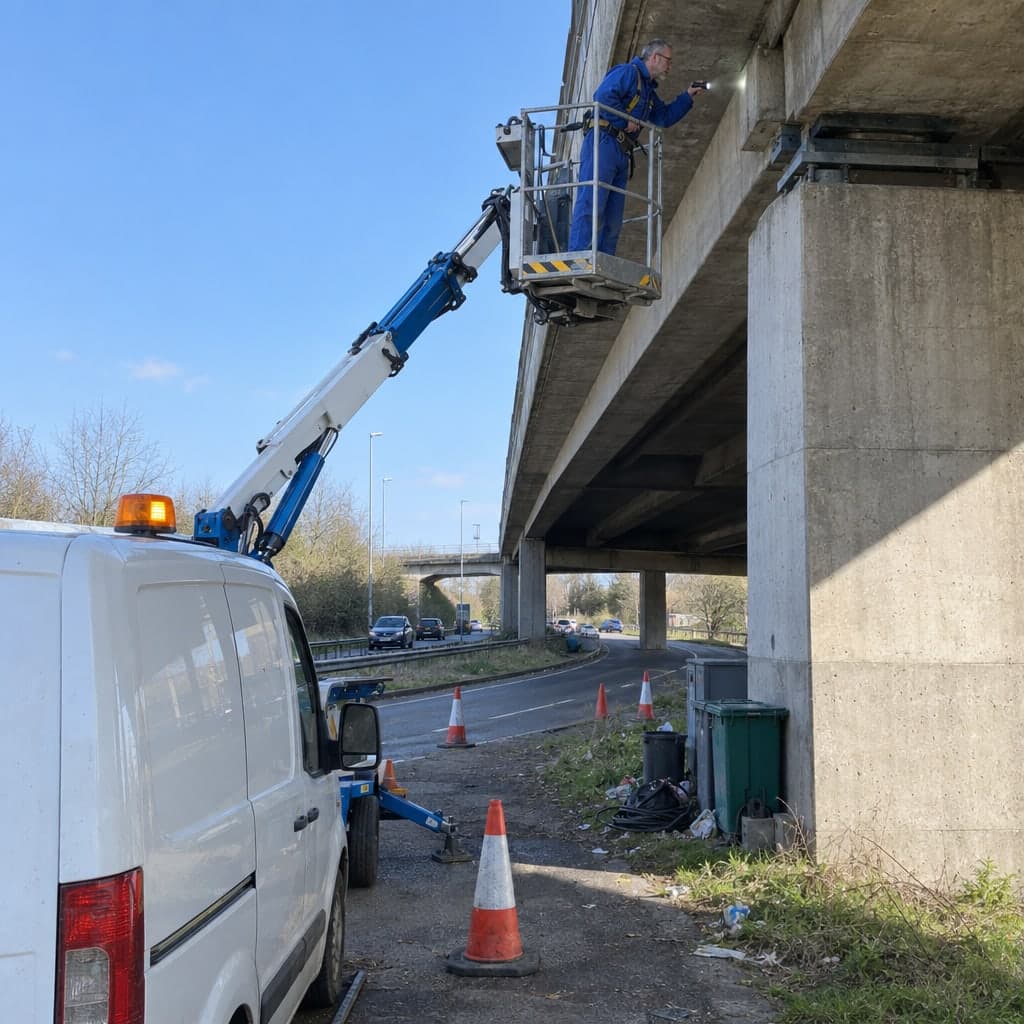
One of the most distinctive features of the NYC PIPS program is the 10% physical examination requirement. The QPSI must physically examine—not just visually observe—a minimum of 10% of each structural element type in the parking structure. Physical examination includes techniques such as chain dragging across floor slabs to detect delamination, hammer sounding on columns and beams to identify subsurface voids, and close-range visual inspection of connections and welds. This requirement goes beyond the typical visual survey common in many structural inspection programs and is closer to the rigor of bridge inspection protocols.
The 10% threshold applies per element type, not per element category. If a parking structure contains 200 columns, the QPSI must physically examine at least 20 of them. If it contains 50 beams, at least 5 must be sounded or closely inspected. The inspector records every examined element in the Physical Examination and Defect Log, including elements found to be in SAFE condition. This creates an auditable record proving that the sampling threshold was met. The DOB can verify compliance by reviewing the defect log entries against the total element count.
The sampling strategy is not random—experienced QPSIs target areas most vulnerable to deterioration. For concrete structures, this means focusing on the lowest level (where drainage collects), areas near expansion joints (where waterproofing typically fails first), and zones directly below the top level (which receives the most salt exposure from vehicle tires). The digital form captures this through the Location/Grid Reference field, which allows inspectors to reference structural grid lines (e.g., "Level 2, Col Line A-4") so that subsequent inspection cycles can compare conditions at the same locations. This systematic approach enables trend analysis across the six-year filing cycles.
For a related structural inspection program that uses similar element-by-element assessment, see the FHWA NBIS/SNBI bridge inspection standard.
FILING & COMPLIANCE
DOB Filing Requirements, Cycles, and Enforcement
PIPS inspection reports are filed through the DOB NOW: Safety portal, with filing cycles divided into three sub-cycles by Community District across New York City.
NYC Local Law 126 divides the six-year inspection cycle into three sub-cycles (A, B, and C), each covering specific Community Districts across the five boroughs. This staggered schedule prevents all parking structures from requiring inspection simultaneously and distributes the workload across the QPSI profession. The DOB publishes the sub-cycle assignments and filing deadlines on the DOB NOW: Safety portal. Building owners who fail to file on time face violations and potential penalties. For structures classified as UNSAFE, the QPSI must notify the DOB immediately—on the same business day that the unsafe condition is discovered—via both a 311 call and a filing on the DOB NOW portal.
The Final Classification and Attestation section of the form requires the QPSI to certify several compliance elements. The 10% Inspection Verification confirms that the physical examination threshold was met. The Immediate Notification Confirmed field attests that DOB and the building owner were notified of any unsafe conditions on the day of discovery. The Stability Analysis Required field indicates whether the QPSI determined that a formal stability analysis is needed—typically triggered when SREM or UNSAFE conditions involve primary structural framing members. The QPSI Signature provides the professional seal and digital signature required for the report to have legal standing.
SREM conditions generate an Annual Observation Checklist, a secondary document that building owners must maintain between inspection cycles. This checklist requires yearly verification that SREM conditions have not deteriorated and that scheduled repairs are progressing on time. The checklist mechanism creates a continuous monitoring obligation that extends the PIPS program beyond a single inspection event into an ongoing maintenance accountability framework.
For complete filing instructions and sub-cycle schedules, refer to the NYC DOB PIPS information page. The governing rule text is published in 1 RCNY §103-13 (NYC Rules).
For a comparable mandated structural inspection program in the US, see the USACE levee safety inspection standard.
QUESTIONS
Frequently Asked Questions
What is NYC Local Law 126 (PIPS)?
NYC Local Law 126 of 2021 established the Periodic Inspection of Parking Structures (PIPS) program. It requires all parking structures in New York City to undergo a structural condition assessment every six years by a Qualified Parking Structure Inspector (QPSI), with findings classified as SAFE, SREM, or UNSAFE.
What does SREM mean in a PIPS inspection?
SREM stands for Safe with Repairs and/or Engineering Monitoring. It indicates that the element is safe at the time of inspection but requires repairs or monitoring within one to six years to prevent deterioration into an unsafe condition. The QPSI must specify a repair deadline for each SREM finding.
What happens when a parking structure is classified as UNSAFE?
An UNSAFE classification requires the QPSI to notify the DOB on the same business day via a 311 call and the DOB NOW portal. Physical safeguards such as shoring, netting, or area closures must be installed immediately. All unsafe repairs must be completed within one year of the assessment.
What is the 10% physical examination requirement?
PIPS requires the QPSI to physically examine at least 10% of each structural element type, not just visually observe them. Physical examination includes chain dragging, hammer sounding, and close-range inspection. Every examined element must be documented in the defect log.
Who can perform a PIPS inspection?
Only a Qualified Parking Structure Inspector (QPSI) can perform a PIPS inspection. A QPSI must be a New York State licensed Professional Engineer (PE) with specific experience in structural engineering, designated by the NYC Department of Buildings.
How often are PIPS inspections required?
PIPS inspections are required every six years, divided into three sub-cycles (A, B, C) based on Community District. The DOB publishes filing deadlines for each sub-cycle. Between full inspections, SREM conditions require annual observation checklists.
What is the difference between PIPS and FISP (Local Law 11)?
PIPS (Local Law 126) covers the structural integrity of parking structures, while FISP/Local Law 11 covers exterior facade inspections. They are separate programs with different inspection scopes, cycles, and filing requirements, though both are administered by the NYC DOB.
In practice
See how the round runs in Geocadra
The solution page shows this inspection regime on real open data: the import, the form, the round, the record per asset and the export.
Condition assessments, roof checks and statutory tests for public building portfolios, with every visit appended to the buildingOpen the solution page: Buildings & FacilitiesTRY IT FREE
Digitize your NYC LL 126 PIPS inspections
Replace paper forms and spreadsheets with structured digital inspections, built for standards like NYC LL 126 PIPS.
No credit card requiredFree trial included